Recently Published
Most Viewed
General Principles of Vocational Education and Training in the Tourism Education System of the German Speaking Countries in Western Europe Image
Journal article

General Principles of Vocational Education and Training in the Tourism Education System of the German Speaking Countries in Western Europe

The article deals with the analysis of tourism education systems of the leading countries of Western Europe, namely Germany, Austria, Switzerland and Luxembourg united in the crosslinguistic category of "German-speaking countries". The peculiarities of institutional and disciplinary components of vocational education in tourism are revealed, the educational-qualification levels of the structural model of tourism education are determined and characterized, the main functions of the vocational schools of tourism are defined, and the peculiarities of vocational training of future skilled workers in the specified countries are outlined. It is defined, that the structural model of tourism education in the German-speaking countries includes the pathway of obtaining professional qualifications, different types of educational establishments, a variety of vocational study programs and degree levels. It is appointed, that the predominant advantage of basic tourism education in the German-speaking countries is the dual system of vocational education and training that enables students getting qualifications in the form of apprenticeship working together with enterprise training providers. A distinctive feature of higher tourism education is the binary structure in which the traditional university sector exists concurrently with the non-university higher education sector. It is defined, that the common feature of tourism education systems in German-speaking countries is the flexibility of educational process and the coherence of educational-qualification levels within vocational schools and higher institutions. It is determined, that the compliance with the principles of consistency and continuity, the focus on providing future skilled workers with the opportunity to obtain appropriate vocational training program in compliance with their needs and abilities are the basic principles of lifelong learning in tourism education. It is proved that the intense competition between organizers of tourism education in German-speaking countries contributes to their desire of following strictly the existing International education standards. The constant modernization of the content of vocational education and training, as well as cooperation with the European and non-European educational partners in the higher tourism education sphere intensifies student mobility and academic activity
Google Docs of the Google Apps Services: Coordination and Supervision of the Activity of Organizational and Educational Units of Higher Educational Institutions Image
Journal article

Google Docs of the Google Apps Services: Coordination and Supervision of the Activity of Organizational and Educational Units of Higher Educational Institutions

The article analyzes the benefits of using Google Docs of the Google Apps services in the activity of organizational and educational units of higher educational institutions. The main emphasis is placed on the use of Google Docs of the Google Apps services, which enables documentation processing and working with joint documents of the units. The author of the article outlines the main advantages of Google Docs of the Google Apps services and analyzes their application in the activity of organizational and educational units of higher educational institutions. The article describes the main features of Google Docs. It has been determined that the use of Google Docs of the Google Apps services is a part of the establishment of an information system that creates a unified information space for a contemporary higher educational institution.The author has analyzed the subsystems of the project management of the organizational structure, educational technology and processes of interaction with each participant of the educational process, external and internal communications.The methodologist of the organizational and educational unit (SMC for research, scientific projects and programmes of the Borys Grinchenko Kyiv University) analyzed and presented a specific example of effective use of Google Docs of the Google Apps services in working with the documentation in the course of organizing the educational process. It has been determined that the creation and arrangement of mechanisms for the development of the corporate content using the Google Docs of the Google Apps services will allow staff members of the organizational and educational units of higher educational institutions to develop and jointly work with documentation in the course of organization of the educational process, which will allow to automate the activity of organizational and educational units, and enable the staff members to ensure quality processing of documentation and interact with other colleagues. It is defined that such organization of educational process optimizes the activity of organizational and educational units of higher educational institutions is a sample of successful management and a guarantee of well-organized work in corresponding departments of higher education institutions
Suggested For You
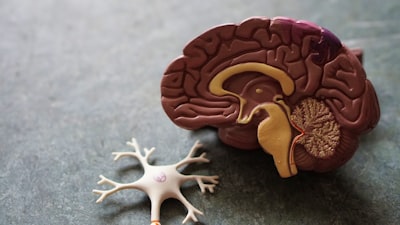
Finding Genetic Factors Associated with Cognitive Abilities Image

Journal article

Finding Genetic Factors Associated with Cognitive Abilities

The article provides an overview of the results of modern genetic studies of human cognitive abilities. Finding genetic factors, associated with cognitive abilities, will have far-reaching ramifications at all levels of understanding from DNA to brain and to behavior. Despite its complexity, cognitive ability is a reasonable candidate for molecular genetic research because it is one of the most heritable features of behavior. The first attempts to find genetic factors, associated with cognitive abilities, focused on genes, involved in brain development and function, but this direction proved to be unproductive, as it turned out that there are about 18.000 genes, and it was too difficult to detect among them those genes that are involved in cognitive processes. In addition, a considerable number of genetic factors of human traits are single-nucleotide polymorphisms (SNPs) which are in non-coding DNA regions rather than in traditional genes. The effect of each separate SNP is unimportant, and a clear expression of the general cognitive ability is noticeable only if all the associated SNPs are involved. Currently, over 11,000 such SNPs have been identified, which are uneven in different functional regions of the genome: over 60 % in gene introns, almost 30 % in intergenic DNA regions, about 5 % in gene exons, and about 5 % in transcribed regions (downstream, upstream) and frame regions (UTR'5, UTR'3) of genes. Also there are found 74 SNPs, associated with school achievements. These SNPs are disproportionately located in genes that regulate transcription and alternative splicing of other genes, which are expressed in nerve tissues of the brain during its prenatal development. Finding genetic factors that explain the inheritance of cognitive abilities is important for both science and society. Information about these factors can be used in other fields of human science – human genetics and medicine. It will open up new scientific horizons for education too owing to understanding of the genetic aspects of learning and memory

Read more articles